


 253
253
Mastercard brings Crypto Credential solution to UAE
This will help make crypto transactions easier
Mastercard launched its Crypto Credential solution in the United Arab Emirates (UAE) and Kazakhstan, marking its entry into the Eastern Europe, Middle East, and Africa region.
According to the press release, this will help make crypto transactions easier by allowing users to send and receive money using simple names instead of long blockchain wallet addresses. It confirms the identities of both the sender and the receiver. After a user is verified, they get a special name to help make transfers safe.
The system also checks if the wallets can work together before finishing any transaction, which lowers the chance of mistakes or losing money.
Gaurang Shah, Mastercard’s Executive Vice President and Head of Core Payments for EEMEA, emphasized the significance of the program.
«As the cryptocurrency landscape continues to mature, we’ve been laser-focused on developing innovative services and capabilities that help make crypto more accessible and secure,» Shah said. «In bringing Mastercard Crypto Credential to the EEMEA region, we’re delivering on our vision to increase and instil trust in blockchain technology.»
Some companies in the crypto industry, like CoinMENA, ATAIX Eurasia, Intebix, and Fuze, are already working together with Mastercard to start this initiative in the area.
More From “Investments”
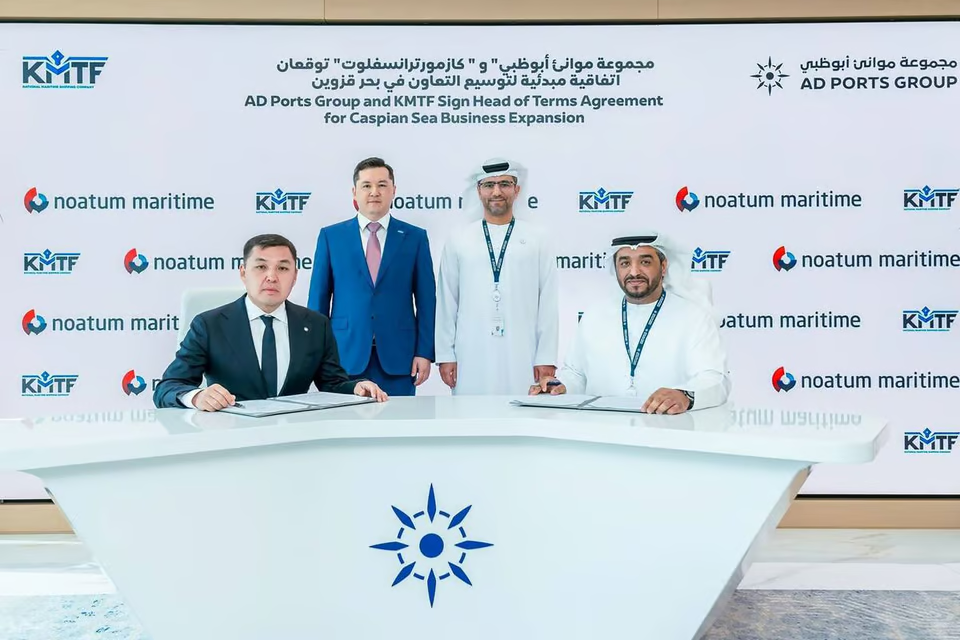
UAE to expand operations in Kazakhstan following $30mln investment
261

Aramco and Ma’aden are to mine lithium in Saudi Arabia
271
Saudi Arabia to enrich and sell uranium
253

UAE’s non-oil sector business activity hits 9-month high
318
Qatar wants to invest in Syrian sectors including energy
285

Why GCC is a magnet for international capital?
351

Saudi wealth fund’s $4bln bond 4x oversubscribed
302

Saudi Arabia, Qatar’s and Oman among investors in Musk’s xAI
567

Saudi Arabia accounted for 40% of the VC capital in MENA in 2024
242
UAE’s Phoenix Group launches US crypto mining facility
278

Kuwait equities lead GCC Markets on banking gains and energy deals
263

Saudi Arabia raised $12bln in international bonds amid strong demand
315